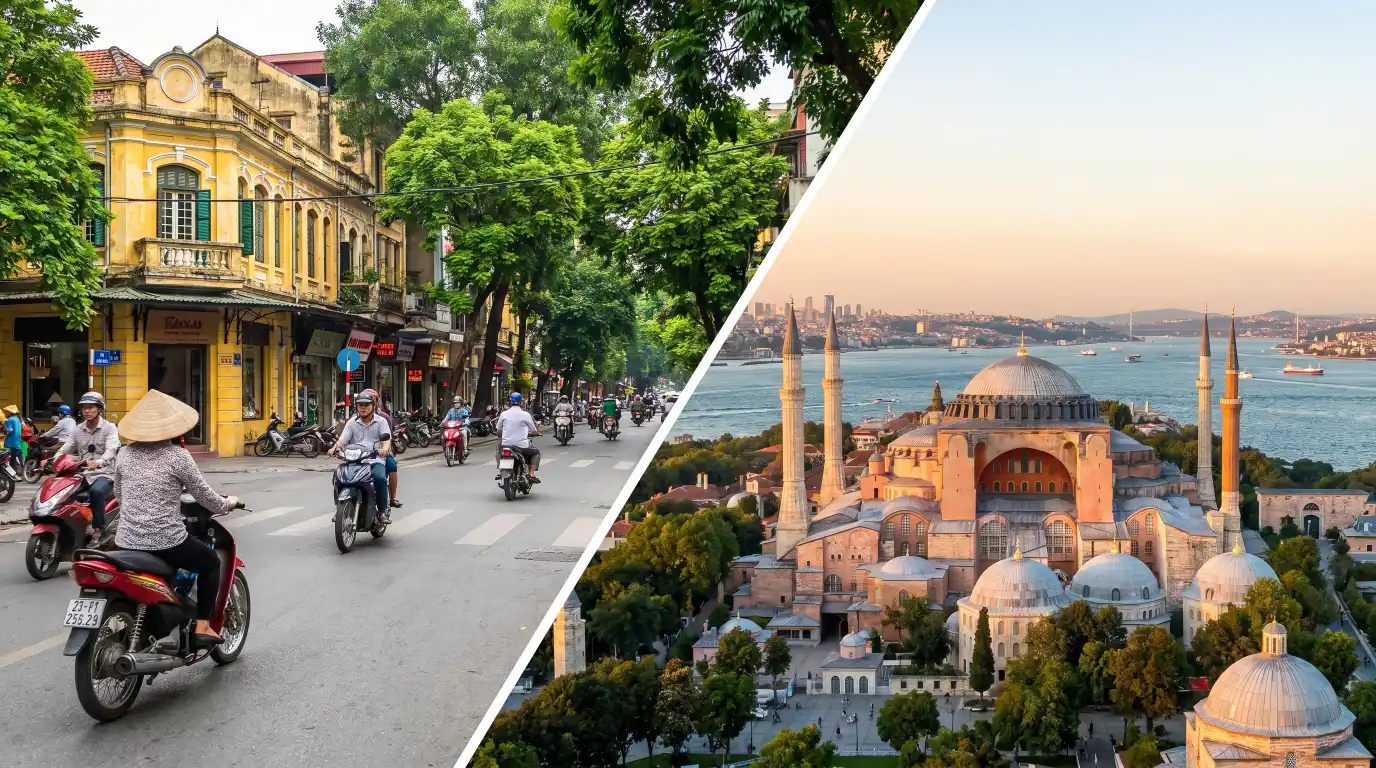
Turkey has long dominated hair transplant tourism — but Vietnam is changing the game. Here's how the two destinations compare on cost, quality, and overall experience.
Medical tourism for hair restoration has exploded over the past decade, and two countries have emerged as standout destinations: Turkey, the long-reigning global capital of hair transplants, and Vietnam, a rising contender offering world-class results at highly competitive prices. If you're weighing your options, this in-depth comparison will help you decide which destination best suits your needs, budget, and expectations — whether you're flying in from Sydney, London, Los Angeles, or Singapore.
The Rise of Medical Tourism for Hair Restoration
Hair loss affects millions worldwide, and the demand for effective, affordable hair transplant procedures continues to grow. In the United States, the UK, and Australia, a quality transplant typically costs between $10,000 and $25,000 — putting surgery out of reach for many patients. This has driven an enormous wave of medical tourism, with patients seeking overseas options where clinical expertise meets affordability.
Turkey established itself as the pioneer of this movement in the 2010s, with Istanbul becoming synonymous with budget-friendly transplants. More recently, Vietnam — particularly Ho Chi Minh City and Hanoi — has emerged as a sophisticated alternative, combining cutting-edge techniques with exceptional hospitality, modern medical facilities, and even lower costs.
Cost Comparison: Vietnam vs Turkey
Clinics in Turkey typically charge between $2,000 and $4,500 for a full hair transplant package, including accommodation, airport transfers, and aftercare. Prices vary significantly depending on the clinic's reputation and the surgeon's experience.
Vietnam offers comparable procedures starting from $1,500 to $3,500, often with more personalized service and smaller patient volumes per day. When factoring in the overall experience, recovery environment, and total trip cost, Vietnam frequently delivers superior value. What a hair transplant in Vietnam really costs →
For patients from the United States, Canada, the UK, or continental Europe, both destinations represent dramatic savings — often 70-85% less than domestic prices. For travelers from Australia, New Zealand, or elsewhere in the Asia-Pacific, Vietnam is significantly closer and cheaper to reach, reducing overall travel expenditure and jet lag.
Quality of Care and Medical Standards
Turkey processes an estimated one million hair transplant patients annually, which has been both a strength and a weakness. Top-tier Turkish clinics operate at an exceptional standard, but the sheer volume has led to the proliferation of "hair transplant mills" — high-volume operations where technicians, rather than doctors, perform most of the procedure. International patients have increasingly reported rushed consultations, assembly-line experiences, and inconsistent results.
Vietnam has cultivated a more boutique approach. Leading Vietnamese clinics operate under strict medical regulations, employ internationally trained surgeons (many with credentials from the US, Europe, Korea, and Japan), and typically handle fewer patients per day. This means each case receives greater attention from the lead surgeon rather than being delegated to technicians. Vietnamese doctors are known for meticulous craftsmanship and a patient-first philosophy, producing natural-looking results that hold up under close scrutiny.
Techniques Offered
Both countries offer the full spectrum of modern hair transplant techniques:
- FUE (Follicular Unit Extraction) — the most popular minimally invasive method
- DHI (Direct Hair Implantation) — using specialized Choi pens for precise placement
- FUT (Follicular Unit Transplantation) — older strip method, still useful in specific cases
- Sapphire FUE — utilizing sapphire blades for cleaner incisions and faster healing
- Long Hair FUE — allowing patients to see immediate results
- Beard and eyebrow transplants — both countries have extensive experience
Vietnamese clinics tend to invest heavily in the latest technology and often provide highly customized treatment plans tailored to each patient's hair type, ethnicity, and aesthetic goals. Turkish clinics generally offer higher graft counts per session, but this isn't always advantageous — over-harvesting can damage donor areas and compromise long-term results.
Surgeon Expertise Across Diverse Hair Types
Both destinations serve international clientele with diverse hair characteristics. Turkey's primary patient base historically comes from the Middle East and Europe, giving surgeons deep experience with Caucasian and Mediterranean hair types.
Vietnam's top clinics deliberately cultivate expertise across all ethnicities, with surgeons trained to work with Caucasian, African, Hispanic, Middle Eastern, and Asian hair — each of which has distinct follicular characteristics, growth patterns, and aesthetic considerations. Reputable Vietnamese clinics routinely treat patients from Australia, the US, the UK, Germany, France, and across Asia, producing results tailored to each patient's natural features and hairline preferences.
Travel Experience and Recovery Environment
Istanbul is a vibrant, historic city, but it can feel overwhelming during recovery. The climate varies dramatically by season, traffic is notoriously difficult, and language barriers outside tourist zones can be frustrating.
Vietnam offers a gentler, more restorative recovery experience. Ho Chi Minh City and Hanoi provide world-class hotels, incredible cuisine, affordable spa services, and a famously warm, welcoming culture. English is widely spoken in medical and hospitality settings. The tropical climate is consistent year-round, and many clinics partner with boutique hotels offering tailored recovery packages. Patients can extend their trip to beach destinations like Da Nang, Hoi An, or Phu Quoc — turning a medical journey into a genuine holiday at prices that make the entire trip remarkably affordable.
Aftercare and Follow-Up
Turkish clinics often provide a single intensive aftercare session before patients fly home, and post-return communication can be inconsistent depending on the clinic.
Established Vietnamese clinics emphasize long-term relationships with their international patients. Most offer multiple follow-up consultations via video call, detailed recovery protocols in English, and ongoing support for up to 12 months post-surgery. This continuity — critical for monitoring growth and addressing any concerns — significantly improves outcomes for patients who've traveled thousands of miles.
Which Should You Choose?
Choose Turkey if: You want maximum graft counts in a single session, prefer a highly established destination with extensive online reviews, or are traveling from within Europe where flights are quick and cheap.
Choose Vietnam if: You value personalized care, prefer boutique clinics over high-volume operations, want a more serene recovery environment, or want to combine your procedure with a memorable holiday. Vietnam is particularly attractive for patients from Australia, New Zealand, and Asia-Pacific regions, but increasingly popular with American and European travelers seeking genuine value without compromising on quality.
Final Thoughts
Both Vietnam and Turkey offer excellent hair transplant options at a fraction of Western prices. However, Vietnam's combination of skilled surgeons, boutique clinic environments, exceptional hospitality, and outstanding value is making it the smart choice for a growing number of international patients from every corner of the globe.
Ready to explore your options? Consult with a reputable Vietnamese clinic to receive a personalized assessment and discover why Vietnam is quickly becoming a premier destination for hair restoration worldwide.