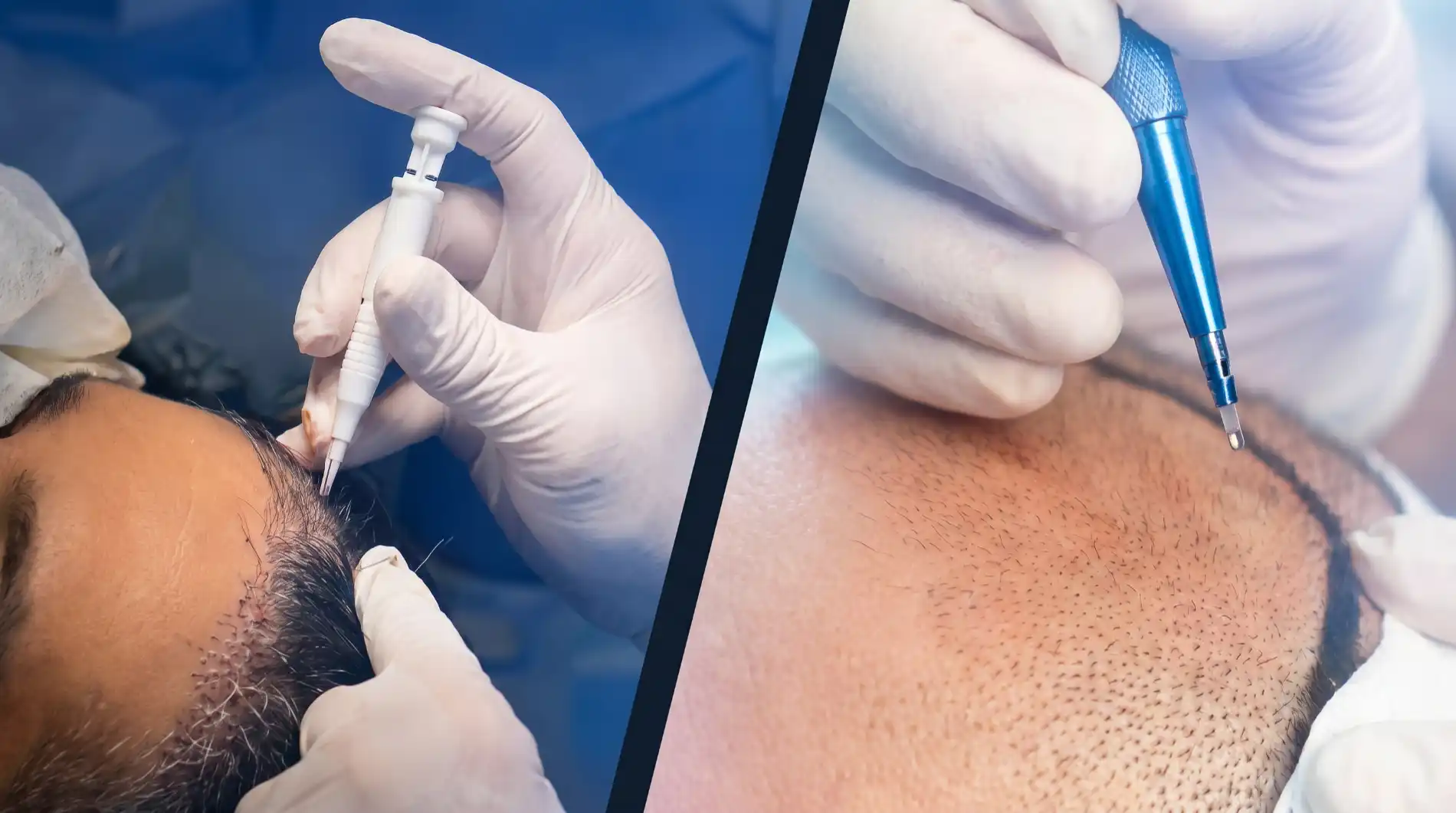
The biggest factor affecting your hair transplant results isn't the country, the technique, or the price — it's whether a qualified surgeon actually performs your procedure. Here's what every patient should know about the surgeon vs technician question, and how to identify clinics that get it right.
When you book a hair transplant, you assume the surgeon you consulted with will perform your procedure. It seems obvious — they're the doctor, after all. But across the global hair transplant industry, this assumption is increasingly wrong. In many high-volume clinics, the surgeon you met during consultation may spend just minutes in the operating room, while unlicensed technicians perform the bulk of your surgery. This article explains the difference between surgeon-led and technician-led procedures, why it matters enormously for your results, and how to identify which type of clinic you're actually booking with.
The Quiet Crisis in Hair Transplant Tourism
Hair transplantation has exploded into a multi-billion-dollar global industry, with destinations like Turkey processing nearly a million procedures annually. This volume has driven prices down dramatically — but it has also pushed many clinics toward an assembly-line model that the industry rarely discusses openly.
In this model, a single surgeon may oversee 5-10 procedures per day across multiple operating rooms. The math simply doesn't work for the surgeon to be hands-on throughout each one. Instead, technicians — often with limited formal medical training — perform most of the actual work, while the surgeon rotates between rooms to handle critical moments or quality checks.
The International Society of Hair Restoration Surgery (ISHRS) has repeatedly raised concerns about this trend, warning patients that procedures performed predominantly by technicians can lead to inferior results, donor area damage, and complications that are harder to address. Yet the practice remains common because it's profitable, and most patients don't know to ask.
What "Surgeon-Led" Actually Means
A genuinely surgeon-led hair transplant means the qualified medical doctor personally performs the critical surgical steps:
- Designing the hairline — assessing your facial structure, hair characteristics, and long-term aging
- Extracting follicular units from the donor area — the most technically demanding step, where mistakes cause permanent donor scarring
- Creating recipient site channels — controlling angle, depth, and density to produce natural-looking results
- Overseeing implantation — the placement of grafts into the prepared sites
In a surgeon-led practice, the doctor is hands-on for the procedure's full duration, with technicians supporting specific tasks under direct supervision rather than performing core surgery independently.
What "Technician-Led" Looks Like
In technician-led clinics, the surgeon's involvement is often limited to:
- A brief consultation (sometimes done by sales staff, not the doctor)
- Drawing the hairline at the start of the procedure
- Brief check-ins during the surgery
- Final approval at the end
Everything else — extraction, channel creation, and implantation — is performed by technicians. In some clinics, these technicians are well-trained and experienced. In others, they're newly hired staff with minimal qualifications. The patient typically has no way of knowing which.
This model exists because it's economically efficient. A clinic can run multiple operating rooms simultaneously, charge competitive prices, and process huge patient volumes. The trade-off is consistency, accountability, and ultimately, your results.
Why This Matters for Your Results
Hair transplantation is one of the most technically demanding cosmetic procedures in modern medicine. Every graft is a living tissue transplant requiring precise handling, correct angle and depth placement, and minimal time outside the body. Small errors compound across thousands of grafts.
When procedures are surgeon-led, you typically see:
- Higher graft survival rates — proper handling means more transplanted hairs actually grow
- More natural hairlines — surgeons make hundreds of micro-decisions about angle and density that technicians may miss
- Better donor area preservation — careful extraction prevents the patchy, over-harvested look that plagues many transplant tourists
- Fewer complications — sterile technique, proper anesthesia, and prompt response to issues all benefit from medical expertise
- Better long-term outcomes — surgeons design for how your hair will look in 10-20 years, not just immediately after
Technician-led procedures can produce acceptable results, particularly at the better clinics. But the variability is enormous, and when things go wrong — bad hairline design, poor graft survival, donor scarring — the consequences are often permanent and expensive to correct.
How Vietnam's Model Differs
Vietnam's leading hair transplant clinics have generally embraced a surgeon-led approach, largely by necessity and design. The country's medical regulations are stricter about what non-physicians can do during surgery, and the boutique clinic model that dominates Vietnamese hair restoration favors quality over volume.
Top Vietnamese clinics typically:
- Limit daily patient volume to 1-3 procedures per surgeon
- Have the lead surgeon personally perform extraction and channel creation
- Use small, dedicated teams rather than rotating technician pools
- Allow longer procedure times — quality work cannot be rushed
- Provide direct surgeon access during consultation and follow-up
This isn't true of every clinic in Vietnam — like any country, Vietnam has clinics across the quality spectrum. But the leading internationally-focused clinics have built their reputations on surgeon-led care, and it's a defining feature of the country's hair transplant industry.
Red Flags That Suggest a Technician-Led Clinic
When researching any clinic, in any country, watch for these warning signs:
- Vague answers about who performs which steps of the procedure
- The surgeon runs multiple clinics or operates in multiple cities simultaneously
- Daily patient volumes of 5+ procedures per surgeon
- Sales-led consultations where you never speak directly with a doctor before booking
- Suspiciously low prices that don't add up given the time required for proper surgery
- Reluctance to identify the specific surgeon who will perform your procedure
- Heavy emphasis on graft count rather than technique, planning, or design
- Generic before-and-after photos without surgeon attribution
Reputable clinics answer these questions transparently. If a clinic gets defensive or evasive when you ask who actually performs the surgery, that's your answer.
Questions Every Patient Should Ask
Before booking any hair transplant — in Vietnam or elsewhere — ask the clinic directly:
- Will the surgeon I consult with personally perform my procedure?
- Which specific steps does the surgeon perform, and which are delegated to technicians?
- How many procedures does this surgeon perform per day?
- What are the qualifications of the technicians assisting?
- Can I see before-and-after photos of work performed by my specific surgeon?
- What happens if I have complications or unsatisfactory results?
Honest clinics welcome these questions. Evasive responses tell you everything you need to know.
Final Thoughts
The surgeon vs technician question is the single most important factor most patients never think to ask about. It affects your results far more than which country you choose, which technique you select, or how much you pay. A surgeon-led procedure at a competent clinic — anywhere in the world — will generally outperform a technician-led procedure at a famous one.
Vietnam's emphasis on surgeon-led, boutique-scale hair restoration is one of the country's strongest advantages for international patients. Combined with rigorous training, modern technology, and excellent value, it's a major reason why Vietnam has become a serious destination for medical tourists who care about results, not just price.
Whichever destination you ultimately choose, ask the questions above before you book. The answers will tell you whether you're investing in a genuine medical procedure — or signing up for an assembly line.